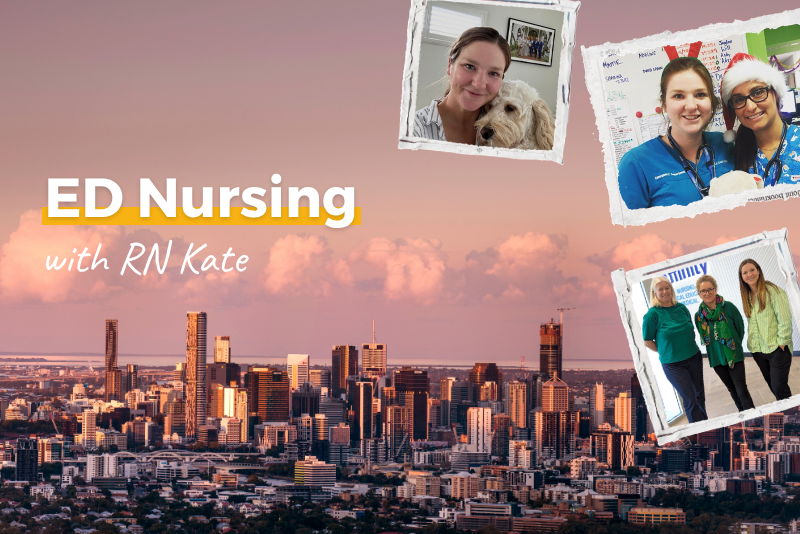
What does it take to build a sustainable, long-term career in one of nursing’s most demanding specialties? RN Kate has worked in emergency nursing since 2012 and now splits her time between the emergency department and Affinity Clinical Education where she helps develop the training for Australian nurses. She shares key insights from spending more than fourteen years in the emergency department, including the importance of lifelong learning and contributing to positive workplace culture.
Kate never planned to become a nurse. Her mum was one, and for years Kate said she’d never follow in her footsteps, mostly because she couldn’t stand the sight of blood. That changed on a feeling more than a plan. ‘One day I just got a feeling – that nursing was going to be the right move,’ she says.
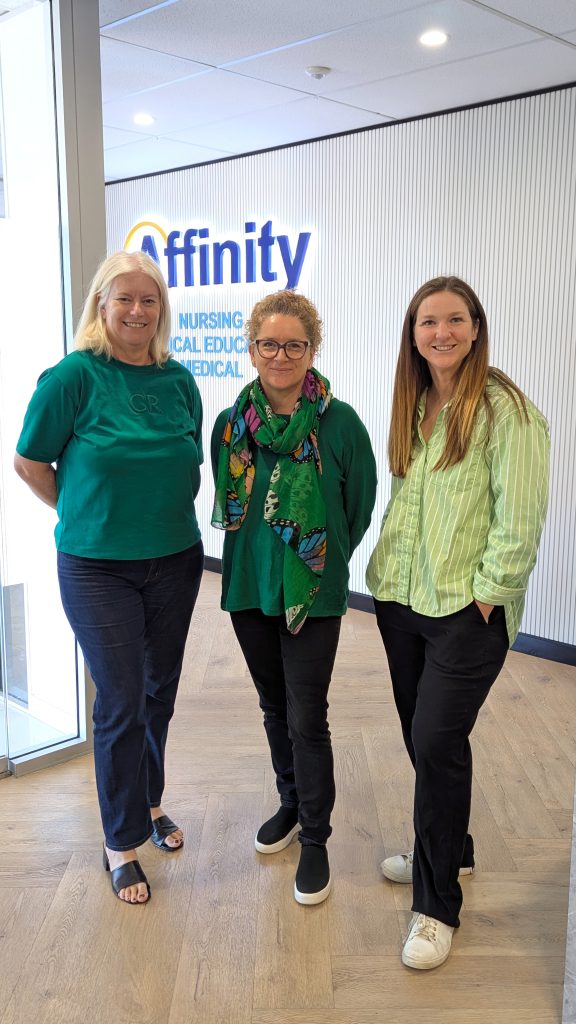
Today, alongside her shifts in a busy Brisbane emergency department, Kate works with Affinity Clinical Education, building self-directed courses for nurses and midwives in Australia.
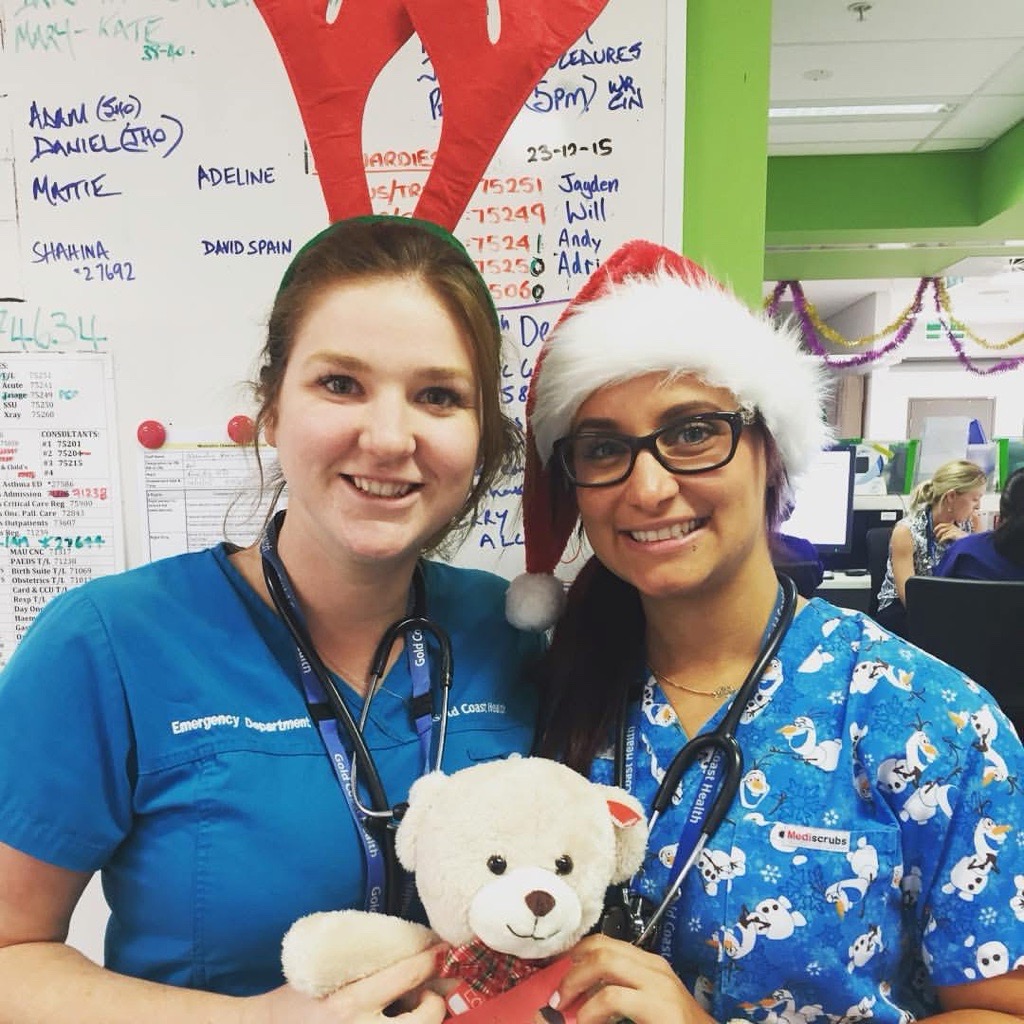
What makes emergency nursing so different?
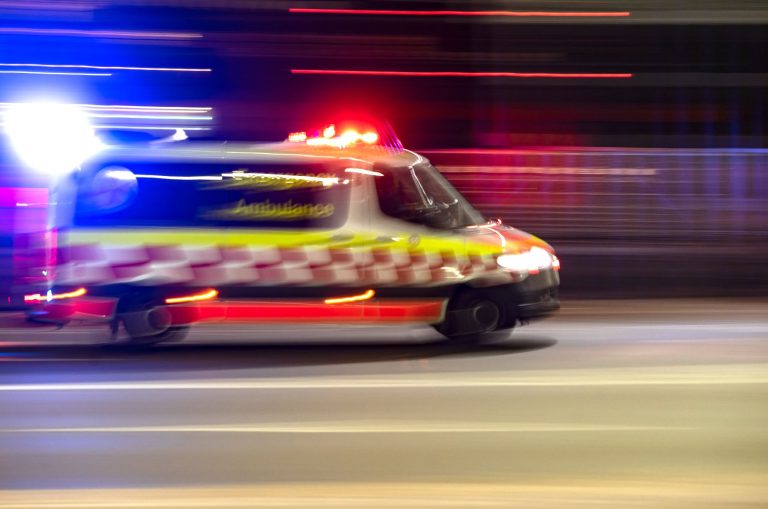
Anyone who has worked in or knows someone in emergency nursing, knows how physically and mentally demanding the role is. ‘There is immense pressure, stress, and responsibility,’ Kate says, when talking about what the emergency department is like. ‘You are seeing people often on the worst days of their lives. But we can help at that time of need, and that is so rewarding.’
Sustainability can be a concern for some nurses, given the emotional toll and unpredictable pace of the role. For Kate, what makes the job sustainable isn’t clinical work alone, but the team around her. ‘The camaraderie of an emergency department is what keeps you,’ she says. ‘A whole group of people working tirelessly to care for people, support each other, get through tough times together, and have a laugh.’
What hard nursing shifts can teach us about life and gratitude
Hard shifts can be confronting, but they can have a way of putting things into perspective. ‘Devastating things happen to people every single day,’ Kate says. ‘It makes you truly grateful for what you have, when you see how fragile life really is.’
What patients can teach us about empathy
Years in emergency care have shaped how Kate reads the people in front of her, particularly on their hardest days. Providing empathic care can be challenging in emergency nursing, where the constant pressure and demands of the environment can make empathy difficult to maintain in day-to-day practice. Years of experience have taught Kate the importance of looking beyond the immediate situation, considering the bigger picture and individual circumstances of each person when providing care, particularly in challenging situations.
‘Everyone has unique life experiences, and these experiences often shape the person standing in front of you,’ Kate says. ‘As nurses, our work can be challenging because many patients are frustrated, unwell, in pain, or anxious, and they may not fully understand what is happening to them.’
‘It is easy to become burnt out when faced with anger or distress while simply trying to do your job.’ When faced with tough situations, her approach is to look past the behaviour in front of her to what’s driving it instead.
‘Remembering that there are often underlying reasons for a person’s behaviour, and responding with empathy even in difficult moments, can make a significant difference,’ says Kate. ‘The ability to remain compassionate and see beyond the behaviour is what sets an exceptional nurse apart from the rest.’
Why recognition matters in healthcare teams
Kate recognises there are often gaps in how nurses communicate with each other day-to-day. ‘I don’t think we complement each other enough in healthcare,’ she says.
‘We’re often our own harshest critics, because the care we provide and any mistakes we might make, can have such a profound impact on someone’s life.’
She sees recognition on the floor as more than a nicety, but a necessity – that it shapes the culture, resilience and morale of a team.
‘Taking the time to recognise your colleagues’ hard work can make a real difference to their mood, mental wellbeing, and job satisfaction,’ Kate says. ‘In turn, this helps create a more positive workplace culture and ultimately supports better patient care.’
Why experienced nurses never stop learning
Confidence in your own clinical knowledge only gets you so far, and Kate has seen how quickly it can be tested during challenging shifts. All nurses – from new grads through to seniors and consultants – can benefit from continuous learning, and this is something that Kate is truly passionate about.
‘In emergency medicine you often encounter a new or unusual illness or injury that reminds you there is always more to learn.
These experiences highlight the importance of continuous learning and staying curious throughout your career. ” Kate says. ‘Even the most experienced staff on the floor, consultants included, don’t know everything.’
Advice for new and experienced nursing clinicians
Having a wealth of experience in the ED, Kate has seen just about everything that the role can throw at you. The advice that she gives when supporting newer clinicians is not to shy away from questions to develop more as a nurse.
‘Ask all the questions. Don’t be afraid to look stupid,’ Kate says.
‘Most of people have asked something similar in the past. Sharing knowledge improves our service delivery, which is the end goal for all of us.’
Kate has also seen how often the direction of learning gets assumed to be unidirectional, when it isn’t.
‘It’s surprising who you can learn things from,’ she says. ‘Sometimes it’s the new grad who can teach you something new.’
Staying connected to clinical practice through education
Alongside her emergency department shifts, Kate works with Affinity Clinical Education, helping build the training that prepares nurses for their roles, including agency contracts in regional, rural and remote facilities across Australia with Affinity Nursing.
Being hands-on in the ED while also developing courses means Kate’s advice comes from current practice, not just theory – it has a significant impact on how Affinity’s courses for upskilling and nursing CPD hours are created and evolved.
Working with Affinity Clinical Education, while still practicing in a major emergency department, keeps my clinical skills current while fulfilling my passion for education and supporting our candidates with their travel nursing journey,’ Kate says.
This includes courses for triage and regional and remote nursing, like ETEK Triage and Cultural Safety, which are endorsed through the Australian College of Rural and Remote Medicine.

Where could a nursing career with Affinity take you?
Kate’s story is proof that a long career in a demanding specialty doesn’t mean standing still. From triage nursing, through to being a Med/Surg or aged care nurse, there’s likely a contract out there that matches your high-demand skillset. Travel nursing with Affinity can help you to build a more flexible, sustainable career in nursing and midwifery through regional, rural, and remote contracts in Australia.
What travel nursing with Affinity Nursing can offer:
- Contracts in every state and territory
- Exposure to diverse clinical environments and communities
- Higher earning potential, with more money in your pocket
- Flexibility to take time off between contracts
- Access to courses from Affinity Clinical Education
- 24/7 support from a specialist team
Click here to explore Affinity Clinical Education’s Nursing courses and continue building your practice with confidence.
Curious about nursing travel contracts? Join Affinity here.
You might also like: