

5min read
Nurses and midwives in Australia can claim a range of work-related tax deductions such as uniforms, professional memberships, self-education, and some travel expenses. For agency and travel nurses, tax time can be more complex because of multiple workplaces, interstate contracts, and out-of-pocket costs throughout the year. This guide is a guide to making EOFY smoother, and includes the most common nurse and midwife tax deductions.
Why tax deductions matter for nurses and midwives
Most nurses and midwives underclaim at tax time, by hundreds and sometimes thousands of dollars. The two common reasons: they didn’t realise they could claim something, or they couldn’t find the receipt when it came time to lodge.
Agency work can make both harder. There are more things to consider… travel between your short-term contracts, equipment you have bought yourself, AHPRA fees. Sometimes even interstate placements with unique requirements.
That’s a lot to keep track of each year.
By understanding what you can legally claim – from uniforms and professional memberships, to travel and self-education – you can rest assured by knowing that you are maximising your tax return, staying compliant with ATO requirements, and avoid missing deductions you may be entitled to at EOFY.

What can nurses claim on tax without receipts?
For a work expense to count, three things have to be true:
- It has to be directly connected to your job.
- You have to have paid for it yourself without reimbursement.
- You have to be able to prove the expense.
The ATO allows four areas where you don’t need to keep receipts, though you still need to be able to show how you worked out the claim if asked.
- Laundry up to $150. $1 per load for full work uniforms, 50 cents per load if mixed with personal items. You still need to be able to show how you worked out your claim.
- Phone and internet up to $50. No written evidence required below this threshold, but you have to be able to justify the work-use portion.
- Total work-related expenses up to $300. No receipts required, but the expenses still have to be real, work-related, and paid by you.
- Small individual expenses of $10 or less, capped at $200 total. Useful for small consumables, or one-off items.
Above these thresholds you need written evidence. Even where receipts aren’t required, a note in your phone or a calendar entry helps if you get reviewed. The ATO app can also be used to track expenses as they happen.
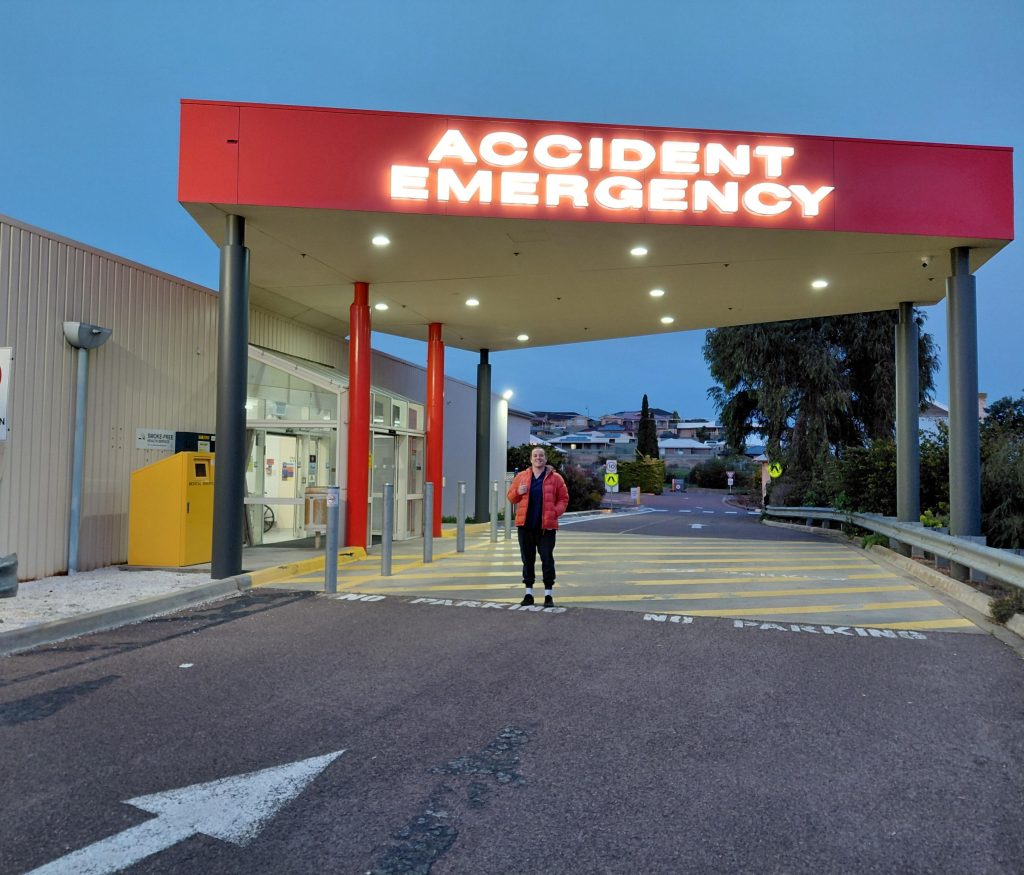
RN Caitlin on contract in the Northern Territory
What can nurses and midwives claim on tax?
Review this quick-scan guide for the most commonly claimed tax items by nurses and midwives.
1. Professional memberships and union fees
Membership fees paid to professional organisations or nursing unions are fully deductible if they relate to your work.
The usual ones are the Australian Nursing and Midwifery Federation (ANMF), Australian College of Nursing (ACN) and other ATO-recognised nursing or midwifery associations.
Keep the annual receipt or bank statement for proof.
2. Uniforms and laundry expenses
If you are required to wear a specific uniform or protective gear, you can claim it. Laundry for those uniforms is also claimable.
Examples of claimable items:
- Scrubs and branded uniforms
- Protective gear (gloves, masks, PPE)
- Non-slip nursing shoes
3. Self-education and professional development
Course costs are claimable if the study connects to your current role and builds on the skills and knowledge you need for your current duties or is likely to result in an increase in income from your current employment.
Claimable expenses include:
- Course or seminar fees
- Textbooks and journals
- Stationery and printing
- Travel to and from a course venue
4. Equipment and supplies
Work gear you’ve paid for yourself is deductible. Stethoscopes, fob watches, laptops used for record-keeping or training, medical reference books.
Items costing $300 or less can usually be claimed in full the year you bought them. Anything more expensive has to be depreciated over its effective life. If the item has personal use too, like a laptop you also use at home for non-work things, only claim the work-use percentage.
5. Phone and internet usage
Work-related calls and data are claimable. That covers calling your agency or hospitals, checking work emails, logging hours worked, and submitting paperwork.
You can only claim the work portion. If you are not claiming more than $50 in total, you do not need to keep records.
If you claim more than $50, you need to keep written evidence of the total amount you incurred for phone, data and internet and records to show your work use. For example, an itemised bill where you can identify your work-related phone calls and data use.
6. Home office expenses
Administrative work done from home such as updating compliance paperwork or telehealth shifts worked at home, can support a home office claim.
You can either use the ATO’s fixed rate method to cover electricity bills, internet or phone costs; or the actual cost method if you have detailed receipts.
Be sure to record the hours worked from home and the nature of the tasks performed to substantiate the claim.
7. Travel expenses
You can claim the cost of using a car you own when you drive directly between separate jobs on the same day. For example, travelling from your first job as a nurse to your second job as a university lecturer or, to and from an alternative workplace for the same employer on the same day.
If you claim car expenses, you can use the logbook method or the cents per kilometre method to calculate your deduction.
You can’t claim the cost of normal trips between home and work, even if you live a long way from your usual workplace or you are on-call, and you can’t claim anything your employer has already reimbursed you for.

How Affinity supports and nurses and midwives
Affinity Nursing has been nurse-owned since 2003, and there are a few things about how the agency runs which have flow-on to your tax position at EOFY.
Accommodation and flights to contracts are paid by Affinity, not deducted from your pay. There is nothing to claim back and no reimbursement question to work through. CPD completed through Affinity’s in-house clinical education is also provided at no cost so there is nothing to claim but the records stay on your file if you need them.
If you do have out of pocket expenses, they should be reviewed for deduction based on a registered tax professional’s advice.
Being prepared at tax time
For nurses and midwives, the biggest difference at EOFY usually comes down to understanding what is genuinely a work-related expense, and ensuring you keep accurate, organised records throughout the year.
Keeping receipts, invoices, logbooks and notes as you go will not only make tax time significantly smoother, but helps support your claims if the ATO has any inquiries. Expenses such as uniforms, professional memberships, equipment, self-education and work-related travel may all be deductible, which is a much-needed saving that can be put towards other personal or professional goals.
If you’re unsure whether an expense applies to your situation, it’s always worth checking the current ATO guidance or speaking with a registered tax professional.
Frequently asked questions about tax deductions for nurses and midwives
Yes, but deductions must relate only to the income you earn from that specific role. Keep separate records for each job if you work across multiple employers or contracts.
To stay compliant and maximise your deductions:
- Keep detailed records: receipts, invoices, diaries, and logbooks
- Separate personal and work expenses
- Keep records for five years in case of an ATO review
- Claim only what you can substantiate
The ATO conducts targeted reviews for healthcare workers, so accuracy matters.
Yes, but only the work-use portion. If the laptop cost $300 or less you can claim it in full in the year you bought it. Above $300 it has to be depreciated over its effective life. If you also use it personally, work out the work percentage – for example, hours used for compliance paperwork or study versus total use – and claim only that share.
Any vaccinations, medical assessments or screenings required for your employment may be deductible if you paid for them yourself and were not reimbursed by your employer. We recommend keeping invoices or payment confirmations for your records.
Yes. Professional indemnity insurance paid for by nurses or midwives may be tax deductible. The policy should relate directly to your work, and you need to have paid for it yourself.
Legitimate ATO tax deductions for nurses and midwives only include expenses you’ve paid for yourself, where you haven’t received a reimbursement. If your employer paid, don’t claim it.
Disclaimer: This article is for general information only and does not constitute financial or tax advice. Always consult a registered tax professional for advice specific to your situation.
Considering being an agency nurse or midwife in Australia? Click here to join the Affinity Nursing community.
You might also like: